EN
EN
Professional finishing results depend heavily on the quality and precision of your painting tools and techniques. While traditional brush and roller methods have their place, custom spray paint offers unique advantages that can transform your projects from amateur-looking to professionally finished. The key lies in understanding how custom spray paint formulations and application techniques can be tailored to meet specific project requirements, ensuring consistent coverage, superior durability, and exceptional visual appeal across diverse surfaces and applications.
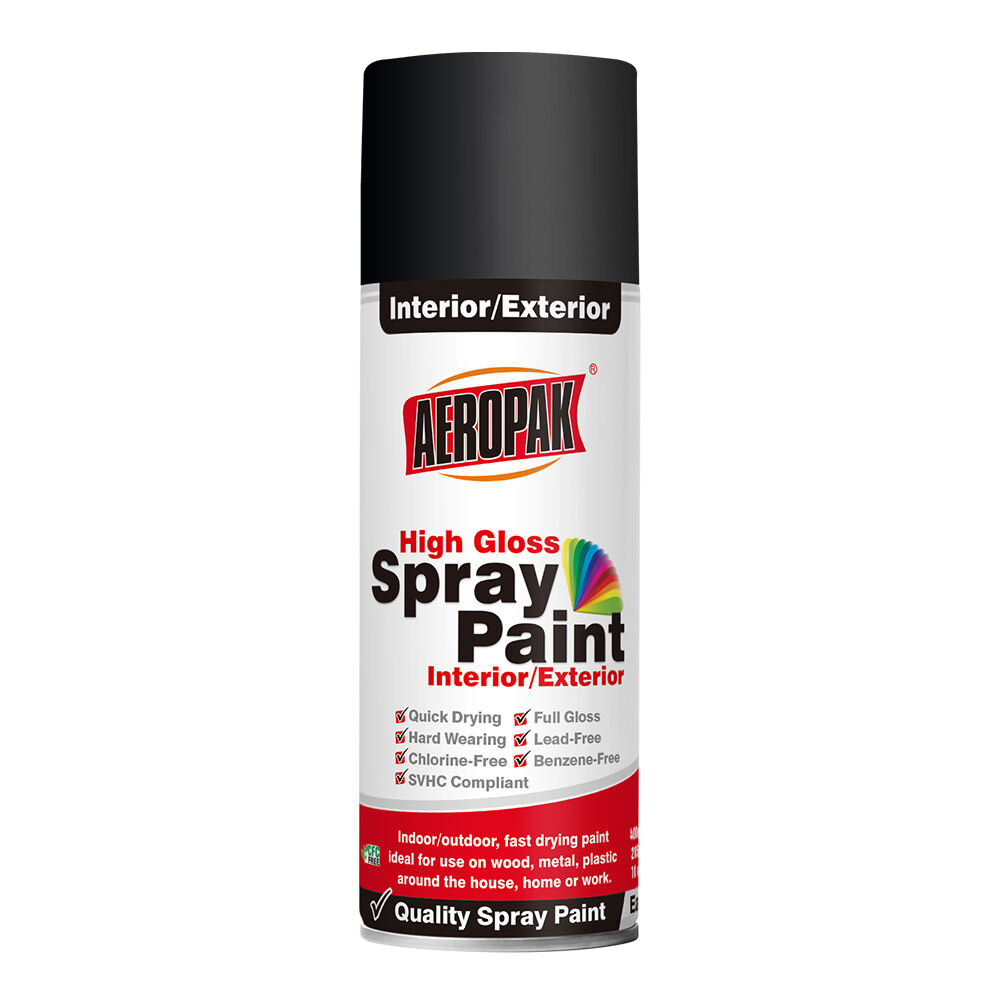
The distinction between generic spray paint and custom spray paint lies in the ability to control every aspect of the formulation and application process. Custom spray paint allows professionals and serious DIY enthusiasts to achieve results that match or exceed those typically associated with expensive professional painting services. This level of control extends from color matching and finish characteristics to application properties and environmental resistance, making it an invaluable tool for achieving truly professional outcomes.
Understanding the Precision Advantages of Custom Spray Paint
Controlled Particle Distribution and Coverage
Custom spray paint delivers professional results primarily through its superior particle distribution system. Unlike standard aerosol products, custom spray paint formulations can be adjusted to produce consistent droplet sizes that ensure uniform coverage across complex surfaces. This precision in particle distribution eliminates the streaking, pooling, and uneven coverage that often plague amateur painting projects.
The atomization process in custom spray paint systems allows for precise control over spray pattern, pressure, and flow rate. This level of control enables users to achieve the smooth, even coats that are the hallmark of professional finishing work. When properly applied, custom spray paint creates a seamless surface texture that rivals factory-applied finishes.
Professional painters understand that surface preparation and application technique work hand in hand with quality materials. Custom spray paint formulations can be selected based on specific surface requirements, ensuring optimal adhesion and finish characteristics for each unique application scenario.
Superior Color Matching and Consistency
One of the most significant advantages of custom spray paint is its ability to deliver precise color matching across multiple containers and application sessions. Professional results demand color consistency that standard off-the-shelf products often cannot guarantee. Custom spray paint formulations undergo rigorous quality control to ensure that each batch maintains identical color properties.
The color stability of custom spray paint extends beyond initial application to long-term performance. Professional-grade formulations incorporate UV inhibitors and color-fast additives that prevent the fading and color shift that can compromise the appearance of painted surfaces over time. This durability ensures that professional results remain professional-looking throughout the service life of the coating.
Custom spray paint also offers the flexibility to create unique color formulations that exactly match existing finishes or design specifications. This capability is essential for restoration projects, where maintaining original appearance standards is critical to achieving professional results.
Application Techniques That Maximize Professional Results
Optimal Spray Pattern Management
Achieving professional results with custom spray paint requires mastering proper spray pattern techniques. The ability to control spray width, overlap patterns, and application distance directly impacts the final finish quality. Professional applicators understand that consistent hand movement and proper timing create the uniform coating thickness that characterizes high-quality work.
Custom spray paint systems often provide adjustable spray patterns that can be optimized for specific surface geometries and project requirements. Wide patterns work best for large, flat surfaces, while narrow patterns provide the precision needed for detailed work and edge treatment. Understanding how to select and maintain proper spray patterns is crucial for achieving professional-level results.
The key to professional application lies in maintaining consistent distance and speed throughout the spraying process. Custom spray paint formulations are designed to work within specific application parameters, and staying within these guidelines ensures optimal flow, coverage, and finish characteristics.
Multi-Coat Building Strategies
Professional finishing with custom spray paint typically involves multiple thin coats rather than single heavy applications. This approach allows for better adhesion, smoother finish development, and easier correction of minor imperfections. Each coat in a professional application sequence serves a specific purpose in building up the final finish thickness and appearance.
The timing between coats is critical when using custom spray paint for professional results. Proper cure timing allows each layer to develop adequate adhesion while maintaining compatibility with subsequent coats. Too little time between coats can cause solvent entrapment and finish defects, while too much time can create adhesion problems.
Custom spray paint formulations can be specifically designed for multi-coat applications, with primer, base, and topcoat systems that work together to create superior durability and appearance. This system approach is fundamental to achieving the depth and richness associated with professional finishing work.
Environmental Control and Professional Setup
Temperature and Humidity Management
Professional results with custom spray paint depend heavily on environmental conditions during application and curing. Temperature and humidity levels directly affect how the paint atomizes, flows, and cures, making environmental control a critical factor in achieving professional-quality finishes. Custom spray paint formulations often include specific recommendations for optimal application conditions.
Proper ventilation plays a dual role in professional spray paint applications. Adequate airflow helps remove overspray and solvent vapors while preventing contamination of the wet paint surface. Custom spray paint systems may require specific ventilation rates to ensure proper curing and finish development.
Dust control is another essential element of professional custom spray paint application. Even minor dust contamination can create surface defects that compromise the professional appearance of the finished coating. Professional applicators use controlled environments and proper timing to minimize contamination risks.
Surface Preparation Standards
The foundation of professional results with custom spray paint begins with thorough surface preparation. Professional-grade preparation goes beyond simple cleaning to include proper degreasing, abrading, and priming as needed for the specific substrate and custom spray paint system being used.
Custom spray paint performs best when applied over properly prepared surfaces that provide optimal adhesion characteristics. This may involve specific cleaning solvents, abrasion techniques, or primer systems that are compatible with the custom spray paint formulation. Professional applicators understand that shortcuts in surface preparation inevitably compromise final results.
Surface contamination detection is a skill that separates professional results from amateur attempts. Residual oils, cleaning compound residues, or incompatible existing coatings can cause adhesion failures or finish defects that become apparent only after the custom spray paint has cured.
Quality Control and Professional Standards
Inspection and Correction Protocols
Professional application of custom spray paint includes systematic inspection procedures that identify and address potential defects before they become permanent problems. These protocols cover everything from initial surface preparation verification to final cure inspection and quality confirmation.
Understanding common defects and their correction methods is essential for maintaining professional standards with custom spray paint applications. Issues such as orange peel, fisheyes, runs, or color variation require specific correction techniques that preserve the integrity of the overall finish.
Professional custom spray paint application includes documentation of process parameters, environmental conditions, and material batch information. This record-keeping enables consistent results across multiple projects and provides valuable troubleshooting information if issues arise.
Long-Term Performance Optimization
Professional results with custom spray paint extend beyond initial appearance to include long-term durability and performance characteristics. Custom formulations can be optimized for specific service conditions, ensuring that the professional appearance is maintained throughout the coating's service life.
Maintenance protocols for custom spray paint finishes help preserve professional appearance over time. Understanding proper cleaning methods, touch-up procedures, and protective measures ensures that the investment in professional application continues to provide value.
Performance monitoring of custom spray paint applications provides valuable feedback for refining techniques and formulations. Professional applicators track finish performance across different applications to continuously improve their processes and results.
FAQ
What makes custom spray paint different from regular aerosol paint in terms of professional results?
Custom spray paint differs from regular aerosol paint through controlled formulation, consistent particle distribution, superior color matching capabilities, and optimized application properties. These factors combine to deliver the uniform coverage, durability, and finish quality that characterize professional work, while regular aerosols often lack the precision and consistency needed for professional-grade results.
How important is surface preparation when using custom spray paint for professional results?
Surface preparation is absolutely critical for professional results with custom spray paint. Proper cleaning, degreasing, abrading, and priming create the foundation for optimal adhesion and finish development. Even the highest quality custom spray paint cannot overcome poor surface preparation, making this step essential for achieving professional-level outcomes.
Can custom spray paint achieve the same results as professional spray booth applications?
Custom spray paint can achieve results that closely match professional spray booth applications when proper techniques, environmental controls, and quality materials are used. While spray booths provide optimal control over all variables, skilled applicators using custom spray paint systems can produce finishes that meet professional standards for many applications, particularly with proper setup and technique.
What environmental factors most impact professional results with custom spray paint?
Temperature, humidity, air movement, and dust control are the primary environmental factors affecting professional results with custom spray paint. Ideal conditions typically include moderate temperatures, low humidity, controlled ventilation for overspray removal, and dust-free environments. Deviations from optimal conditions can cause finish defects, poor adhesion, or compromised appearance that prevent achieving professional-quality results.
Table of Contents
- Understanding the Precision Advantages of Custom Spray Paint
- Application Techniques That Maximize Professional Results
- Environmental Control and Professional Setup
- Quality Control and Professional Standards
-
FAQ
- What makes custom spray paint different from regular aerosol paint in terms of professional results?
- How important is surface preparation when using custom spray paint for professional results?
- Can custom spray paint achieve the same results as professional spray booth applications?
- What environmental factors most impact professional results with custom spray paint?